
Statistics Foundations 4: Advanced Topics
1h 30mAdvanced2022-08-11
Authors
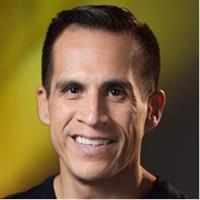
Eddie Davila
Associate Chair for the ASU Supply Chain Management program
Course details
Statistics are everywhere, in every industry, but they're a must for anyone working in data science, business, or business analytics. If you're in one of these specialized fields, chances are you need an advanced understanding of statistics. Complete your mastery in this course, part four in our Statistics Foundations series. Eddie Davila covers concepts such as small sample sizes, t-distribution, degrees of freedom, and more. This advanced skills training moves learners into the practical study and application of experimental design, analysis of variance (ANOVA), two-population comparisons, and regression analysis. Use these lessons to go beyond the basics and dive deeper into the specific factors that influence your own calculations and results.
Skills covered
StatisticsFoundationsData Science
Concepts
0. Introduction
- 01 - The power of advanced statistics
1. Comparing Two Populations - Proportions
- 02 - Explanation of two population comparisons
- 03 - Two population - Confidence interval example
- 04 - Two population - Hypothesis test example
2. Comparing Two Populations - Means
- 05 - Explanation of two population mean comparisons
- 06 - Visualization - Re-randomizing
- 07 - Two population means - Confidence interval example
- 08 - Two population means - Hypothesis test example
3. T-Tests
- 09 - T-distribution vs. z-distribution
- 10 - T-score tables and degrees of freedom
- 11 - Use T-scores to develop confidence intervals
4. ANOVA - Analysis of Variance
- 12 - ANOVA - What is analysis of variance
- 13 - One-way ANOVA and the sum of squares total (SST)
- 14 - Sum of squares within (SSW) and sum of squares between (SSB)
- 15 - F-statistic and ANOVA hypothesis test example
5. Regression Analysis
- 16 - What is regression
- 17 - Regression best fit line
- 18 - Coefficient of determination (R-squared)
- 19 - The correlation coefficient
Continuing Your Advanced Statistics Learning Journey
- 20 - Next steps and additional resources